
Technology / How it works
Two metals.
One seamless pipe.
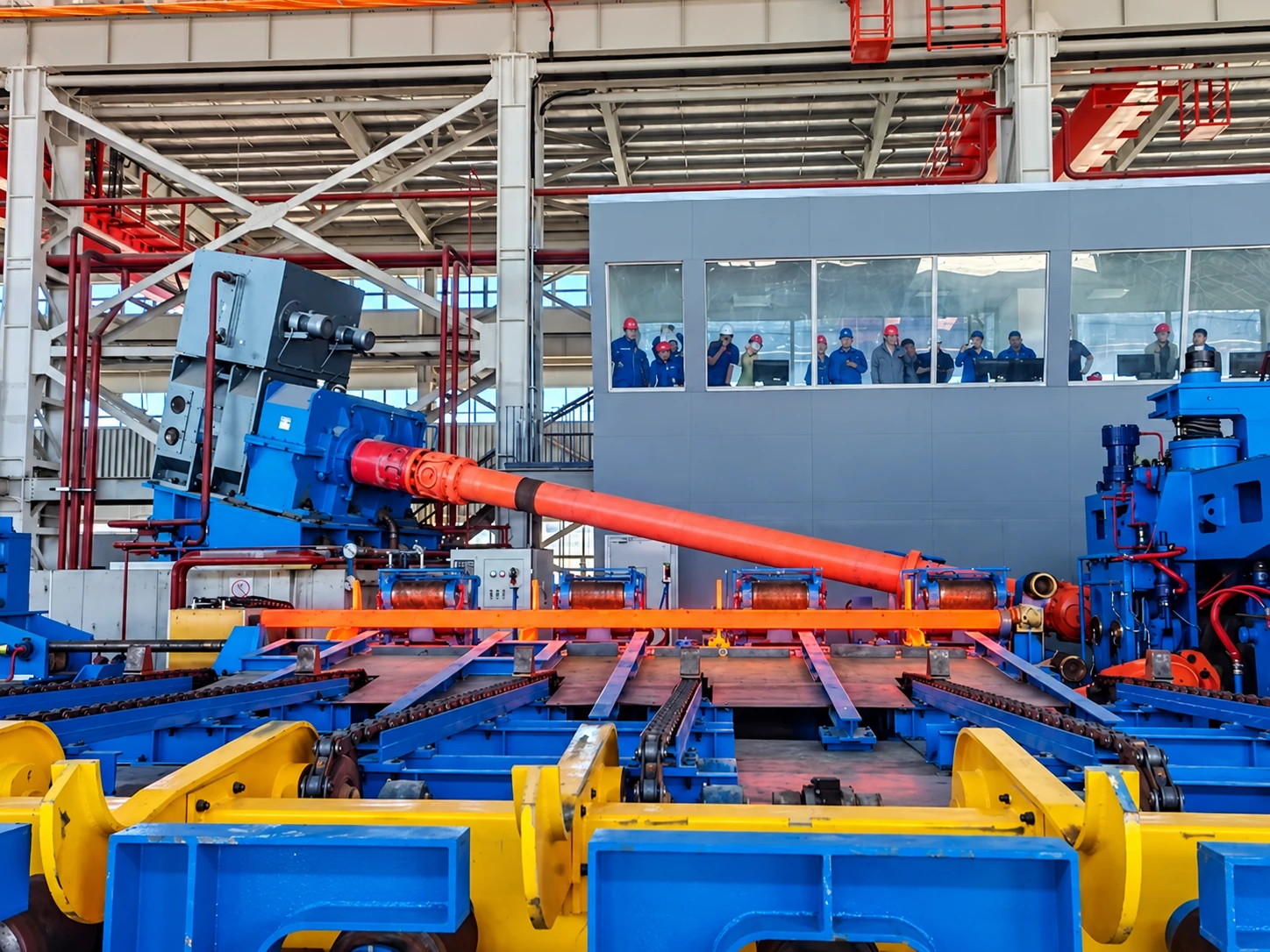
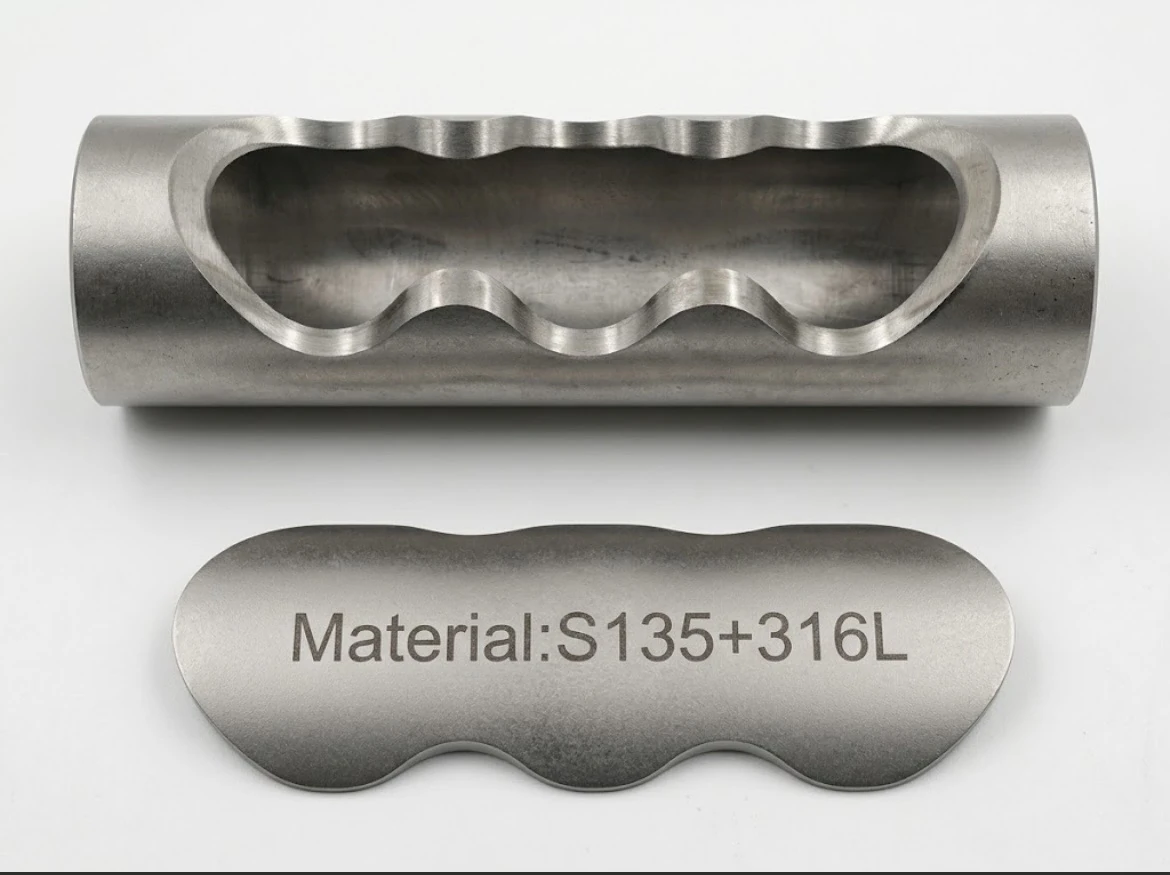
UNIMETRA bonds a structural base metal and a corrosion-resistant alloy into one seamless pipe. The metals are chosen for the fluid, temperature and pressure.
The construction
Each layer has a role.
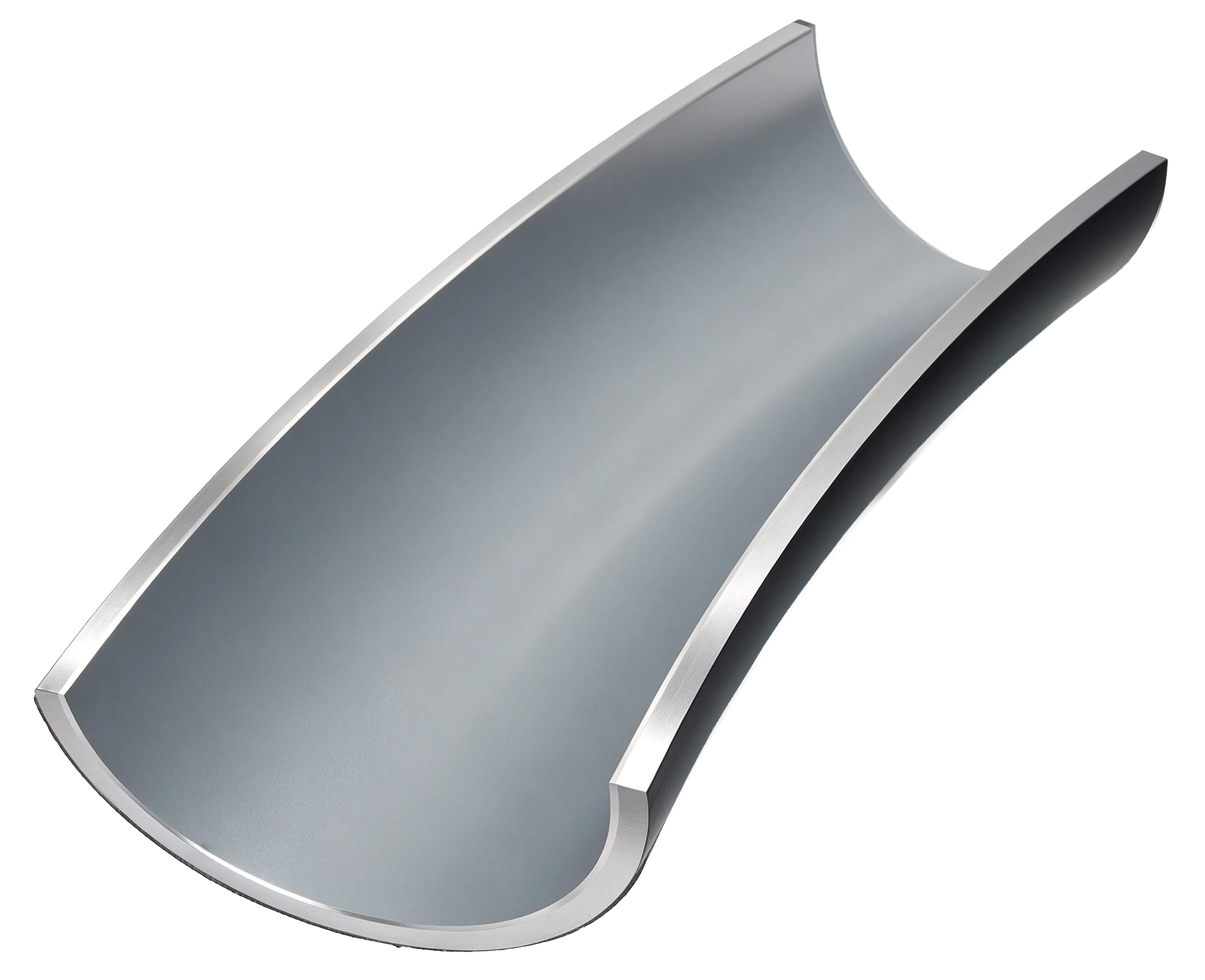
The steel base carries the structural load. A selected alloy protects the surface exposed to the fluid or environment. Both layers are seamless and joined through a metallurgical bond, creating one composite pipe.
The metallurgical bond
Joined at the interface.
During manufacture, elements diffuse across the boundary between the two metals. This creates a metallurgical bond: a connection along the surface where the layers meet, allowing them to work together as one pipe.
The manufacturing route
From two metals
to one pipe.
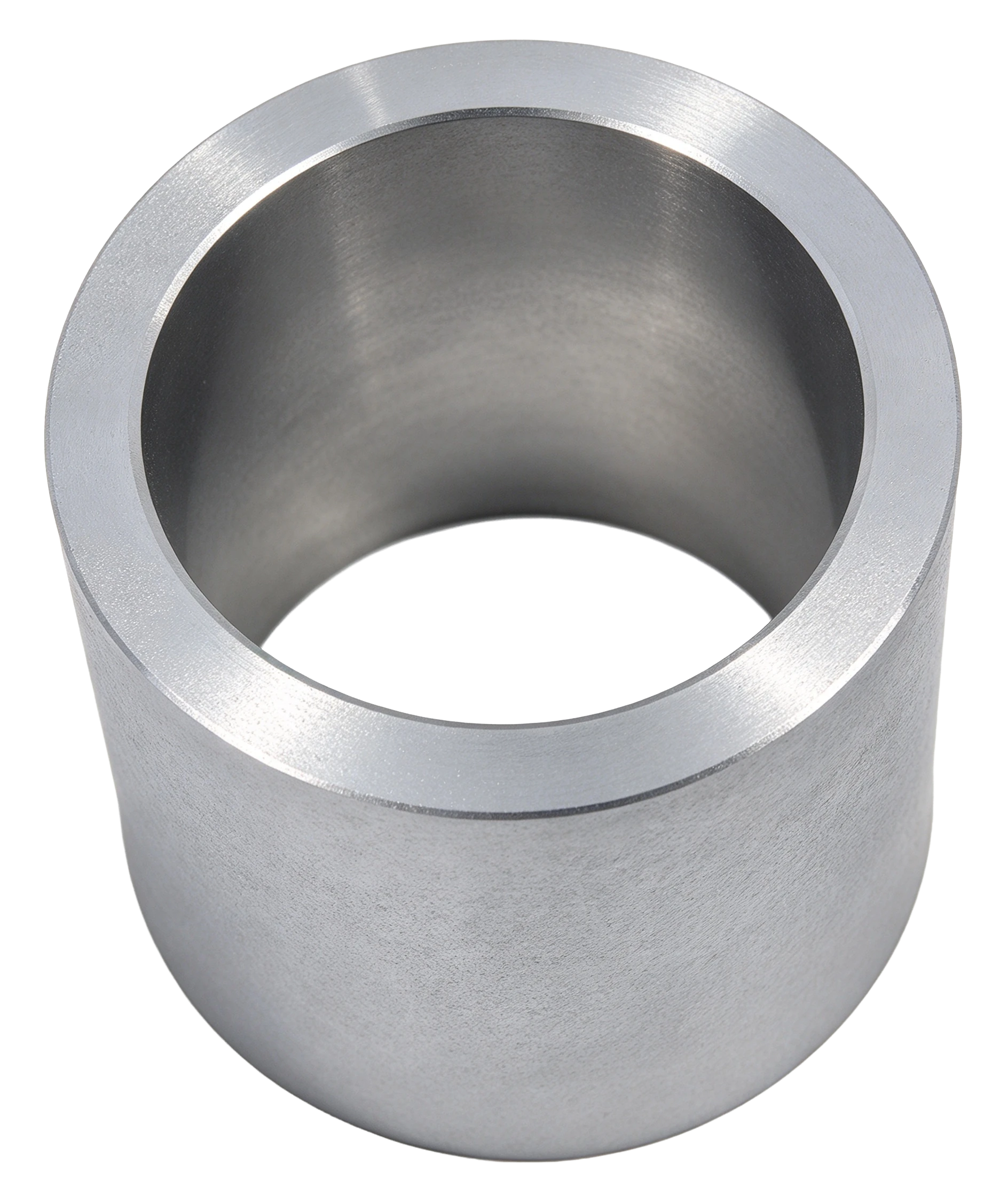
Forming and heat treatment build the composite structure and bring the pipe to its finished shape.
- 01
Heat and pressure
Thermomechanical forming brings the base metal and alloy together to create the bonded structure.
- 02
Precision forming
Cold forming refines the composite pipe's size and shape.
- 03
Heat treatment
The bonded pipe is heat-treated as one structure.
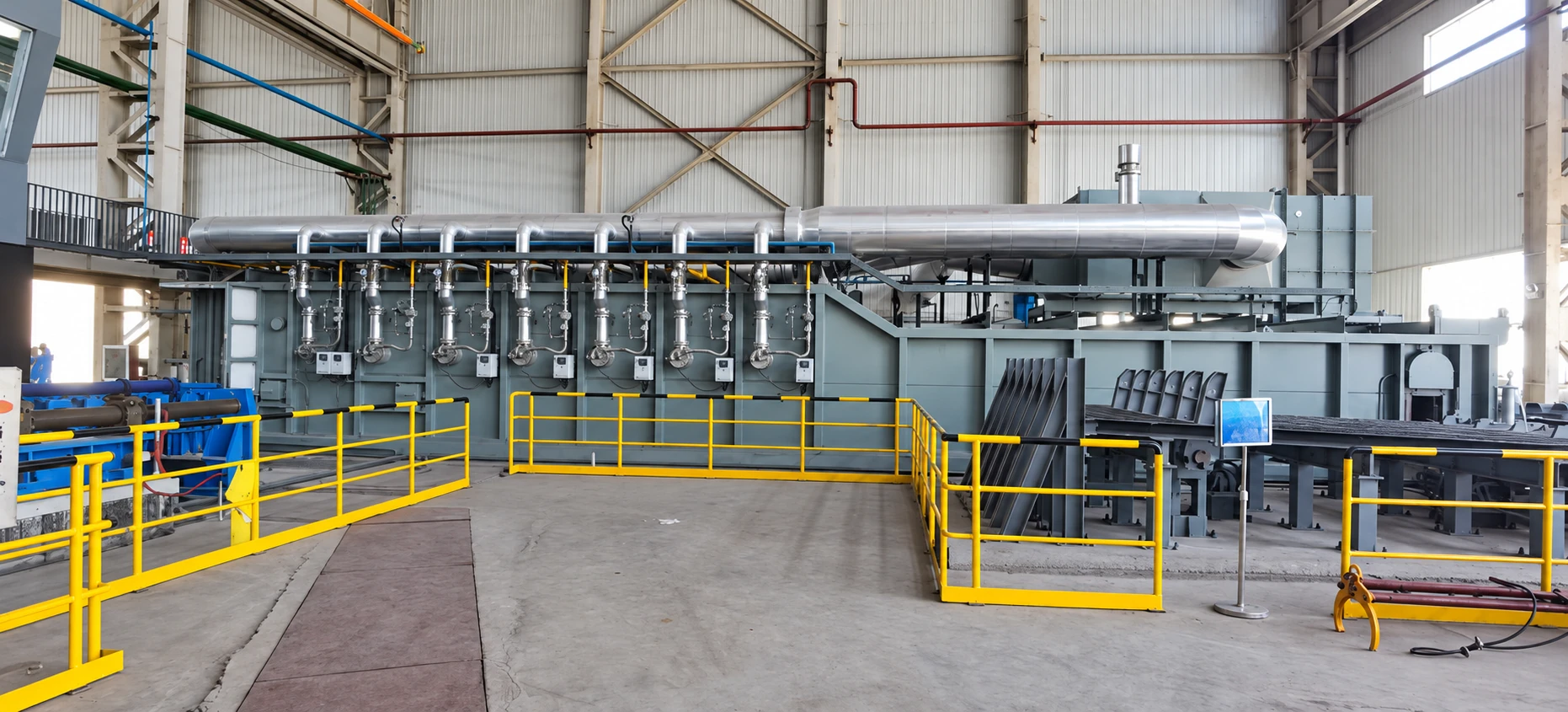
Inside production
See the process.
A closer look at the equipment and forming process used to make composite pipe.
Selecting the metals
Chosen for the service.
The fluid, temperature and pressure guide the choice of metals. Stainless steels, duplex steels and nickel alloys offer different options for the exposed layer. We consider the base steel, connections and fabrication requirements together when recommending a material combination.
Clad pipe technologies
Understand the difference.
How the corrosion-resistant layer joins the steel affects the way a pipe is made, formed and inspected. These are the main differences between the four methods.
| Comparison Dimension | Metallurgically Clad Pipe (UNIMETRA) | Mechanical Lined Pipe | Explosion Clad | Weld Overlay |
|---|---|---|---|---|
| Bond Strength / Interface Criteria (API 5LD) | Shear strength API 5LD threshold ≥137.8 MPa, stable production >300 MPa; flat metallurgical fusion; no waves, no oxide inclusions | No unified shear strength threshold; physical interference fit only, no metallurgical fusion | API 5LD pipe ≥140 MPa; wavy metallurgical interface, vortices easily trap oxide inclusions | API 5LD shear threshold ≥250 MPa; dilution is the core engineering risk |
| Interface Nature | Solid-state metallurgical bond, flat and uniform interface, no fusion transition zone, no weld beads, no wavy vortices | Physical interference fit, base and liner independent, potential interfacial gap | Explosion impact forming, wavy corrugated interface, vortex inclusion zones | Weld deposition forming, fusion transition zone and multi-layer beads, prone to lack of fusion and slag |
| Base Metal Dilution | No base metal dilution; CRA corrosion-resistant layer composition stable and controllable | No fusion dilution, but risk of crevice corrosion | Composition disturbance risk at vortex locations | Significant base dilution risk; must control Fe <5% at 1mm surface, mandatory PMI point-by-point re-inspection |
| NDT UT Acceptance | 100% phased-array UT, clear regular interface waveform; clear criteria, low acceptance disputes; no unbonded zone in last 100mm of pipe ends | UT only checks delamination/wrinkling; interface contact can only be assessed indirectly by tightness/grip force, cannot directly observe interface | UT interfered by inherent wavy echoes; defects easily confused with interface waves; pipe criteria require additional project specification | High noise from bead undulation, complex fusion line signals; high risk of missing interlayer defects; highly dependent on operator experience |
| Base Pipe Mechanical Properties | Base layer impact energy ≥21J, minimal toughness damage | Base pipe mechanics retained; failure from liner buckling/wrinkling | Detonation impact causes work hardening of base; high grades prone to toughness reduction; plate-rolled pipe welds need separate qualification | Multiple thermal cycles, wide HAZ, temper embrittlement risk; end overlay causes ID deformation |
| Crack Sensitivity | Uniform interface stress; low risk of hydrogen-induced disbonding and fatigue crack initiation | Liner slippage, end seal fatigue failure; hydrogen accumulation in gap can cause liner bulging | Stress concentration at wavy locations; vortex inclusions become hydrogen crack sources | High crack sensitivity at fusion line, HAZ, residual stress zones; sour media easily initiate and propagate along fusion line |
| Forming Process Performance | Flattening, cold bending, induction hot bending all possible; interface synergistic deformation, bends do not delaminate or wrinkle; elbows and tees can be stably mass-produced | Strictly prohibited for large-angle cold/hot bending; only suitable for straight pipe, fittings basically unusable | Bending requires strict control of bend radius; longitudinal weld of plate-rolled pipe is weak point, fittings very expensive | Poor cold bending performance; elbow overlay extremely expensive and long lead time, only suitable for short section repair |
| Dimensions & Tolerances | Seamless base pipe, OD tolerance ±0.75%, ovality ≤2%; cladding thickness uniform with tight tolerance; min cladding thickness ≥1.0mm | Liner assembly gap and liner wall thickness uniformity require additional control | Plate-rolled pipe; cladding thickness, weld misalignment and reinforcement need key control | Overlay thickness fluctuates significantly, requires grinding; heat input causes pipe end ID shrinkage |
| Operating Condition Boundaries | Vacuum resistance: excellent, no collapse Thermal cycling ~400°C, uniform stress on flat interface Complex fittings (bends/tees) mass-producible | Poor vacuum resistance, easy liner collapse Thermal cycling causes slippage/buckling; complex fittings basically unusable | Excellent vacuum resistance; thermal cycling constrained by wavy inclusions; fittings feasible but high cost | Excellent vacuum resistance; thermal cycling constrained by fusion dilution layer; fittings extremely expensive |
| Sand-Containing Multiphase Erosion Resistance | Integral metallurgical interface, media cannot penetrate interface; erosion only wears CRA surface layer | High risk, sand particles easily enter gap, crevice erosion damages end seal | Wavy grooves accumulate sand, local erosion accelerated | Erosion preferentially develops along fusion bead fusion line |
| Hydrogen-Induced Disbonding HIC/SSCC Resistance | Flat interface with no voids or inclusions, excellent resistance to hydrogen-induced disbonding | Physical gap at interface, hydrogen accumulation easily induces liner bulging | Vortex inclusions become hydrogen accumulation sites, elevated disbonding risk | Fusion line defects easily become hydrogen crack initiation sites |
| Alternating Pressure - Fatigue Performance | Continuous complete metallurgical interface, excellent fatigue performance, suitable for wellhead pulsating alternating loads | Pressure fluctuations cause liner slippage/friction, end seals prone to fatigue failure | Stress concentration at wavy locations, lower fatigue life | Fusion line is the weak band for fatigue crack initiation |
| End Weld Bevel | Simple bevel preparation; continuous base-cladding transition, controllable weld dilution; mature WPS, moderate welder skill threshold | Complex process, requires liner removal + nickel-based seal weld; weld heat easily burns seal, single-point seal failure risk | Longitudinal weld of plate-rolled pipe is weak line, bevel requires additional inspection | Pipe end requires internal boring 50-100mm then overlay to make bevel, strict control of weld dilution required |
| Production & Delivery | Continuous automated 12m long pipe mass production, high alloy utilization; significant full lifecycle cost advantage for large-volume pipelines | Fast mass production of straight pipe; fittings selection forbidden zone; low purchase price but high hidden costs from seals, spares, and downtime failures | Restricted by explosion site, safety supervision, weather; unstable scheduling; high premium for small orders | Low overlay production efficiency, expensive consumables, unsuitable for long pipeline bulk supply |
| Maintenance & Failure Traceability | UT quantitative defect determination, clear failure traceability; supports on-site conventional repair welding | Bulging/seal failures mostly require full section replacement, almost impossible to repair on site; early defects hard to predict | High repair difficulty; UT signal interference, failure determination prone to disputes | Complex defect sources, difficult traceability; repair requires supporting heat treatment |
| Applicable Scenarios | Long-distance gathering pipelines, production lines, induction bend fittings; high H₂S sour, sand-containing multiphase flow, alternating pressure overseas projects | Limited to low-pressure ambient clean single-phase straight pipe; prohibited for vacuum, sand-containing, alternating pressure conditions | Thick-wall pressure vessel plates and heads; weak cost-performance in pipeline scenarios | Local pipeline repair, short sections, local lining of pressure vessels; also possible for long pipelines. |
Bond Strength / Interface Criteria (API 5LD)
- Metallurgically Clad Pipe (UNIMETRA)
- Shear strength API 5LD threshold ≥137.8 MPa, stable production >300 MPa; flat metallurgical fusion; no waves, no oxide inclusions
- Mechanical Lined Pipe
- No unified shear strength threshold; physical interference fit only, no metallurgical fusion
- Explosion Clad
- API 5LD pipe ≥140 MPa; wavy metallurgical interface, vortices easily trap oxide inclusions
- Weld Overlay
- API 5LD shear threshold ≥250 MPa; dilution is the core engineering risk
Interface Nature
- Metallurgically Clad Pipe (UNIMETRA)
- Solid-state metallurgical bond, flat and uniform interface, no fusion transition zone, no weld beads, no wavy vortices
- Mechanical Lined Pipe
- Physical interference fit, base and liner independent, potential interfacial gap
- Explosion Clad
- Explosion impact forming, wavy corrugated interface, vortex inclusion zones
- Weld Overlay
- Weld deposition forming, fusion transition zone and multi-layer beads, prone to lack of fusion and slag
Base Metal Dilution
- Metallurgically Clad Pipe (UNIMETRA)
- No base metal dilution; CRA corrosion-resistant layer composition stable and controllable
- Mechanical Lined Pipe
- No fusion dilution, but risk of crevice corrosion
- Explosion Clad
- Composition disturbance risk at vortex locations
- Weld Overlay
- Significant base dilution risk; must control Fe <5% at 1mm surface, mandatory PMI point-by-point re-inspection
NDT UT Acceptance
- Metallurgically Clad Pipe (UNIMETRA)
- 100% phased-array UT, clear regular interface waveform; clear criteria, low acceptance disputes; no unbonded zone in last 100mm of pipe ends
- Mechanical Lined Pipe
- UT only checks delamination/wrinkling; interface contact can only be assessed indirectly by tightness/grip force, cannot directly observe interface
- Explosion Clad
- UT interfered by inherent wavy echoes; defects easily confused with interface waves; pipe criteria require additional project specification
- Weld Overlay
- High noise from bead undulation, complex fusion line signals; high risk of missing interlayer defects; highly dependent on operator experience
Base Pipe Mechanical Properties
- Metallurgically Clad Pipe (UNIMETRA)
- Base layer impact energy ≥21J, minimal toughness damage
- Mechanical Lined Pipe
- Base pipe mechanics retained; failure from liner buckling/wrinkling
- Explosion Clad
- Detonation impact causes work hardening of base; high grades prone to toughness reduction; plate-rolled pipe welds need separate qualification
- Weld Overlay
- Multiple thermal cycles, wide HAZ, temper embrittlement risk; end overlay causes ID deformation
Crack Sensitivity
- Metallurgically Clad Pipe (UNIMETRA)
- Uniform interface stress; low risk of hydrogen-induced disbonding and fatigue crack initiation
- Mechanical Lined Pipe
- Liner slippage, end seal fatigue failure; hydrogen accumulation in gap can cause liner bulging
- Explosion Clad
- Stress concentration at wavy locations; vortex inclusions become hydrogen crack sources
- Weld Overlay
- High crack sensitivity at fusion line, HAZ, residual stress zones; sour media easily initiate and propagate along fusion line
Forming Process Performance
- Metallurgically Clad Pipe (UNIMETRA)
- Flattening, cold bending, induction hot bending all possible; interface synergistic deformation, bends do not delaminate or wrinkle; elbows and tees can be stably mass-produced
- Mechanical Lined Pipe
- Strictly prohibited for large-angle cold/hot bending; only suitable for straight pipe, fittings basically unusable
- Explosion Clad
- Bending requires strict control of bend radius; longitudinal weld of plate-rolled pipe is weak point, fittings very expensive
- Weld Overlay
- Poor cold bending performance; elbow overlay extremely expensive and long lead time, only suitable for short section repair
Dimensions & Tolerances
- Metallurgically Clad Pipe (UNIMETRA)
- Seamless base pipe, OD tolerance ±0.75%, ovality ≤2%; cladding thickness uniform with tight tolerance; min cladding thickness ≥1.0mm
- Mechanical Lined Pipe
- Liner assembly gap and liner wall thickness uniformity require additional control
- Explosion Clad
- Plate-rolled pipe; cladding thickness, weld misalignment and reinforcement need key control
- Weld Overlay
- Overlay thickness fluctuates significantly, requires grinding; heat input causes pipe end ID shrinkage
Operating Condition Boundaries
- Metallurgically Clad Pipe (UNIMETRA)
- Vacuum resistance: excellent, no collapse Thermal cycling ~400°C, uniform stress on flat interface Complex fittings (bends/tees) mass-producible
- Mechanical Lined Pipe
- Poor vacuum resistance, easy liner collapse Thermal cycling causes slippage/buckling; complex fittings basically unusable
- Explosion Clad
- Excellent vacuum resistance; thermal cycling constrained by wavy inclusions; fittings feasible but high cost
- Weld Overlay
- Excellent vacuum resistance; thermal cycling constrained by fusion dilution layer; fittings extremely expensive
Sand-Containing Multiphase Erosion Resistance
- Metallurgically Clad Pipe (UNIMETRA)
- Integral metallurgical interface, media cannot penetrate interface; erosion only wears CRA surface layer
- Mechanical Lined Pipe
- High risk, sand particles easily enter gap, crevice erosion damages end seal
- Explosion Clad
- Wavy grooves accumulate sand, local erosion accelerated
- Weld Overlay
- Erosion preferentially develops along fusion bead fusion line
Hydrogen-Induced Disbonding HIC/SSCC Resistance
- Metallurgically Clad Pipe (UNIMETRA)
- Flat interface with no voids or inclusions, excellent resistance to hydrogen-induced disbonding
- Mechanical Lined Pipe
- Physical gap at interface, hydrogen accumulation easily induces liner bulging
- Explosion Clad
- Vortex inclusions become hydrogen accumulation sites, elevated disbonding risk
- Weld Overlay
- Fusion line defects easily become hydrogen crack initiation sites
Alternating Pressure - Fatigue Performance
- Metallurgically Clad Pipe (UNIMETRA)
- Continuous complete metallurgical interface, excellent fatigue performance, suitable for wellhead pulsating alternating loads
- Mechanical Lined Pipe
- Pressure fluctuations cause liner slippage/friction, end seals prone to fatigue failure
- Explosion Clad
- Stress concentration at wavy locations, lower fatigue life
- Weld Overlay
- Fusion line is the weak band for fatigue crack initiation
End Weld Bevel
- Metallurgically Clad Pipe (UNIMETRA)
- Simple bevel preparation; continuous base-cladding transition, controllable weld dilution; mature WPS, moderate welder skill threshold
- Mechanical Lined Pipe
- Complex process, requires liner removal + nickel-based seal weld; weld heat easily burns seal, single-point seal failure risk
- Explosion Clad
- Longitudinal weld of plate-rolled pipe is weak line, bevel requires additional inspection
- Weld Overlay
- Pipe end requires internal boring 50-100mm then overlay to make bevel, strict control of weld dilution required
Production & Delivery
- Metallurgically Clad Pipe (UNIMETRA)
- Continuous automated 12m long pipe mass production, high alloy utilization; significant full lifecycle cost advantage for large-volume pipelines
- Mechanical Lined Pipe
- Fast mass production of straight pipe; fittings selection forbidden zone; low purchase price but high hidden costs from seals, spares, and downtime failures
- Explosion Clad
- Restricted by explosion site, safety supervision, weather; unstable scheduling; high premium for small orders
- Weld Overlay
- Low overlay production efficiency, expensive consumables, unsuitable for long pipeline bulk supply
Maintenance & Failure Traceability
- Metallurgically Clad Pipe (UNIMETRA)
- UT quantitative defect determination, clear failure traceability; supports on-site conventional repair welding
- Mechanical Lined Pipe
- Bulging/seal failures mostly require full section replacement, almost impossible to repair on site; early defects hard to predict
- Explosion Clad
- High repair difficulty; UT signal interference, failure determination prone to disputes
- Weld Overlay
- Complex defect sources, difficult traceability; repair requires supporting heat treatment
Applicable Scenarios
- Metallurgically Clad Pipe (UNIMETRA)
- Long-distance gathering pipelines, production lines, induction bend fittings; high H₂S sour, sand-containing multiphase flow, alternating pressure overseas projects
- Mechanical Lined Pipe
- Limited to low-pressure ambient clean single-phase straight pipe; prohibited for vacuum, sand-containing, alternating pressure conditions
- Explosion Clad
- Thick-wall pressure vessel plates and heads; weak cost-performance in pipeline scenarios
- Weld Overlay
- Local pipeline repair, short sections, local lining of pressure vessels; also possible for long pipelines.
Values and statements are indicative based on documented production and test data. Project-specific verification is required.
Testing & documentation
Product testing and reports.
Request reports covering material composition, strength, bond quality and corrosion performance.
PR-3153
Heat-exchanger tube report
PR-3397
Internally clad pipe report
PR-703
Bend report
Welding-Procedure
Recommended welding procedure
Contact UNIMETRA
Have a project in mind?
Tell us what your pipe needs to handle and we can discuss the material options.