
Industries & applications
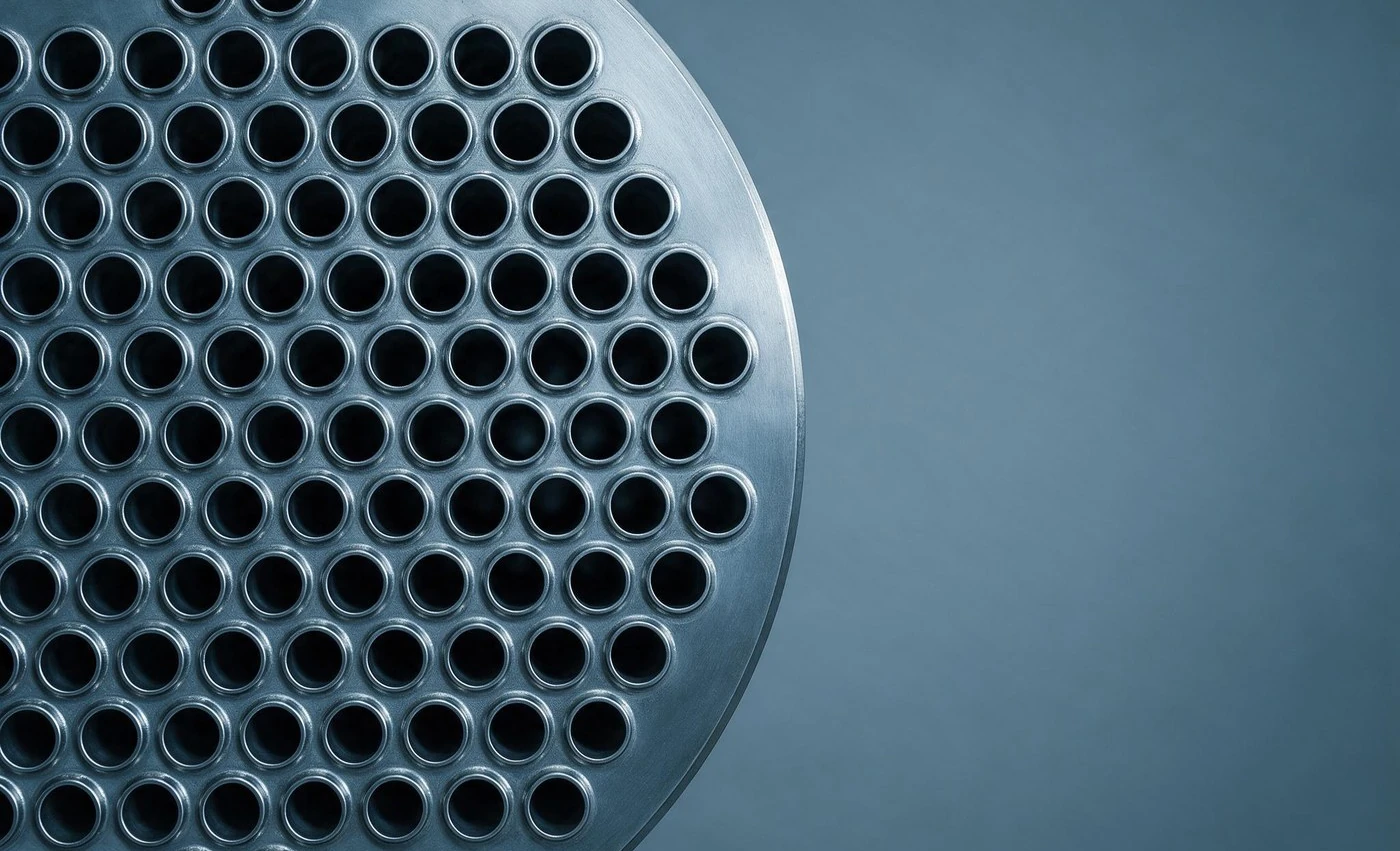
Composite tubes for heat exchangers.
Material combinations for process fluids, brine and cooling water.
Application overview
Industrial heat exchangers
Heat-exchanger tubes transfer heat while carrying process fluids. A composite tube combines a strong base metal with an alloy chosen for the fluid or environment in contact with the tube.
Material selection
How the materials work
Material choice depends on the fluids, temperatures and pressures on both sides, as well as heat transfer and how the tubes are joined.
A tested heat-exchanger tube uses a 15CrMo + 316L combination.
Application details
At a glance.
Possible applications
- Condensers and coolers
- Process and brine heat exchangers
- Chemical and energy equipment
- Custom tube bundles and connections
Operating conditions
- Corrosion, fouling and deposits
- Pressure and repeated temperature changes
- Fluid flow, erosion and vibration
- Pressure drop, cleaning and inspection access
Product forms
Composite heat-exchanger tubes and project-specific tube bundles.
Reference sizes
Typical outside diameter: 19.05–60.3 mm; custom range: 16–127 mm. Total wall thickness: about 1.5–7.5 mm.
Material options
Base metals include 20#, SA106 Gr.B, SA179 and 15CrMo. Exposed alloys include 304, 316L, 2205, 2507, 825, 625 and titanium grades TA1/TA2.
Design considerations
- Fluid chemistry on both sides of the tube
- Pressure, temperature and heat-transfer requirements
- Tube-end joints and inspection
Contact UNIMETRA
Discuss your application.
Our team can help you explore the materials and pipe options for your project.
Contact UNIMETRA